Toronto + York RegionOwner-operated · Toronto + York Region (437) 324-6505

Toronto · M6A · M6B · M5M

Property care in Bathurst and Lawrence

Bathurst and Lawrence is not one City neighbourhood, it is the seam of two. West of Bathurst is Englemount-Lawrence, which contains Lawrence Manor and is unusually apartment-heavy. East of Bathurst is Bedford Park-Nortown, where the original houses date from 1890 to 1940 and are being torn down and rebuilt at pace.

Bathurst from Wilson and the 401 south toward Eglinton

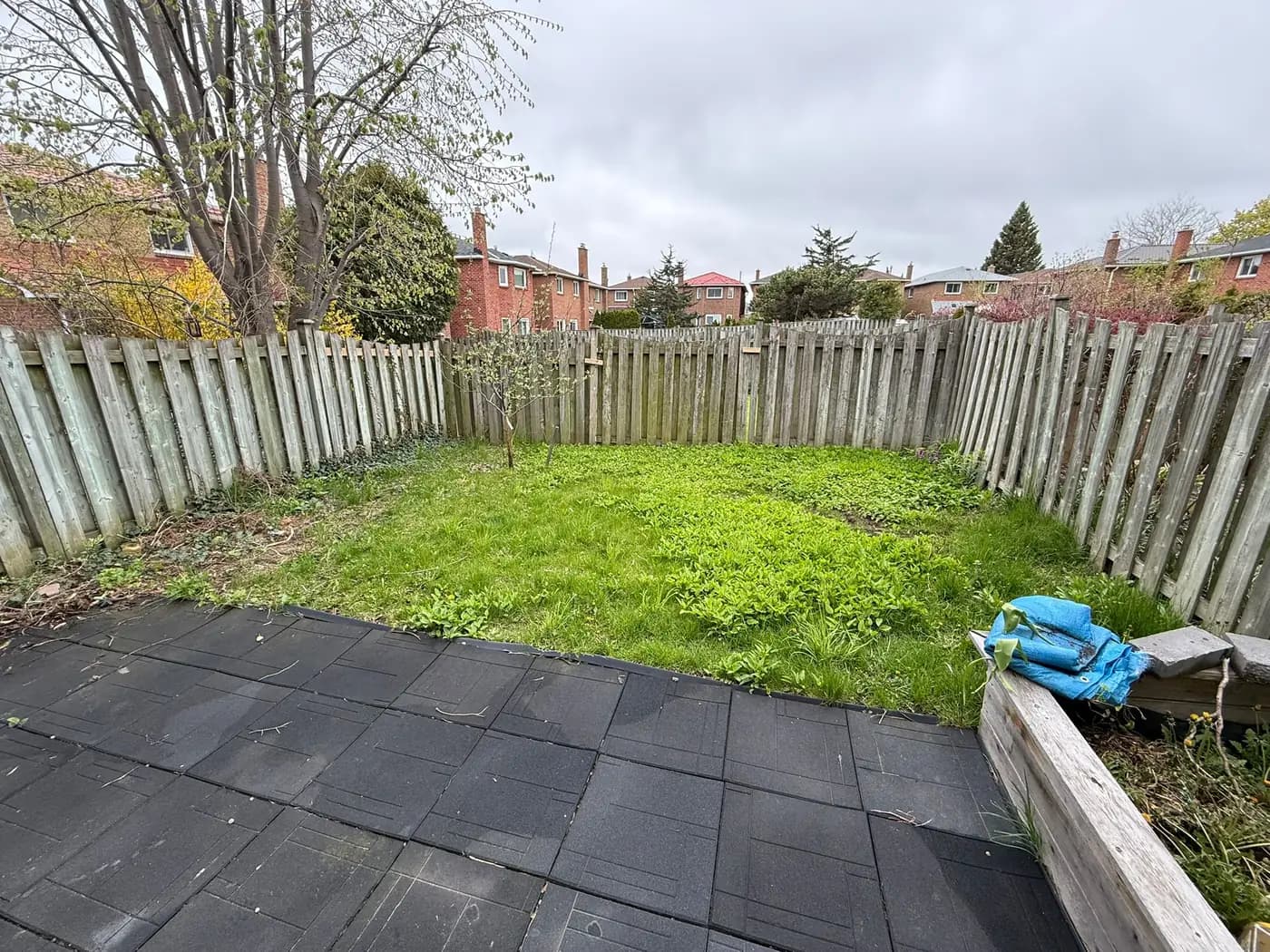
Enclosed back yard with mossy patchy ground and bare soil beside a dark paver patio
Before
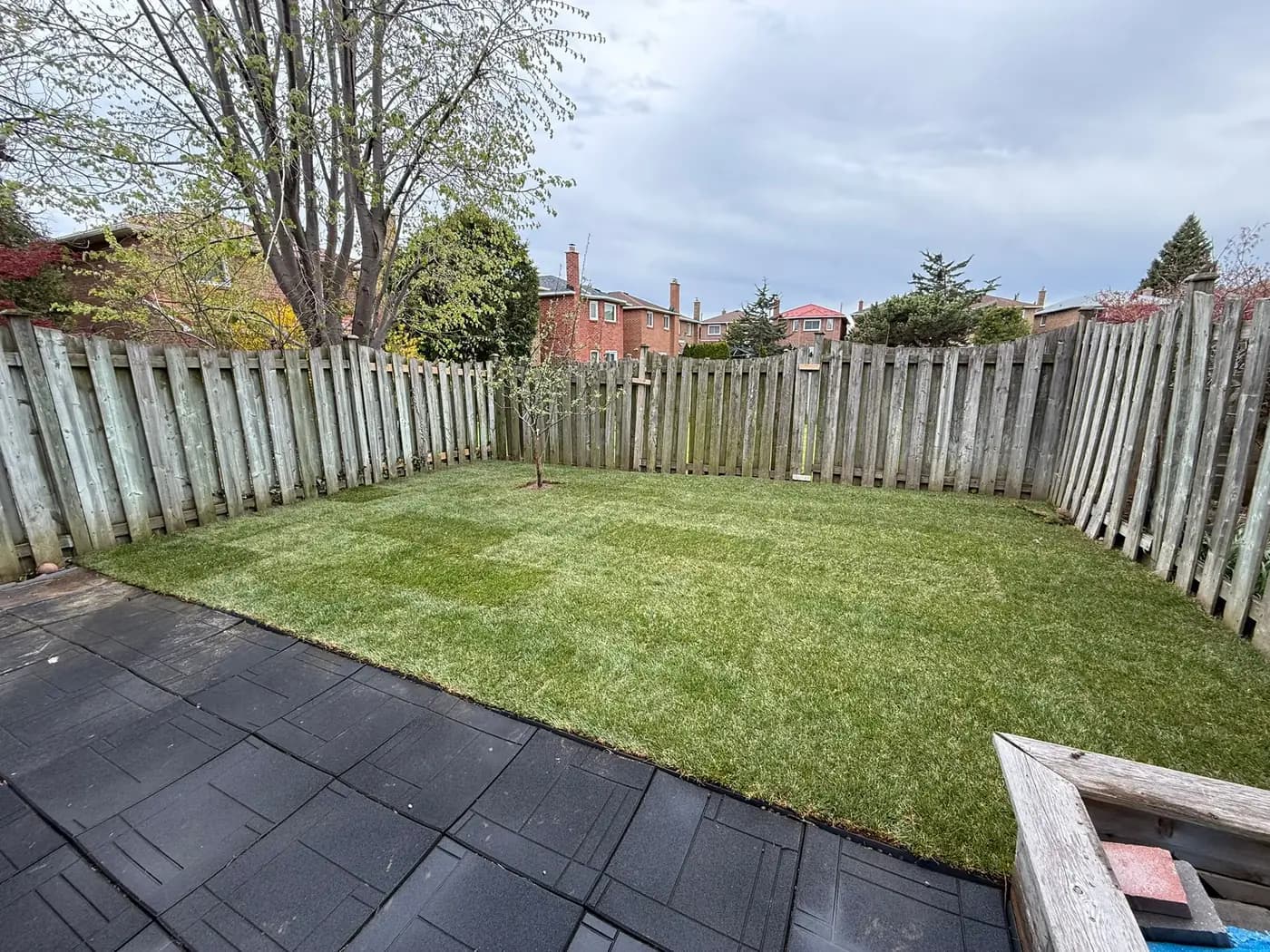
The same back yard with fresh sod laid wall to wall and cut clean against the paver patio
After

A back yard where the paving and the fence were fine and the grass had given up. Stripped, graded and re-sodded wall to wall, cut clean to the existing stone. See how it was done Real Orbit work in Bathurst and Lawrence. Not stock, and not a render.

The lots

Narrow on the east side, because the original stock predates the war and the lots were platted for much smaller houses. When those get rebuilt to full permitted width, the side-yard access that used to exist disappears, which changes how equipment reaches the back.

The housing

Two markets on one street. West of Bathurst runs heavily to high-rise and low-rise apartment and condo stock with detached houses in the minority, most of it built before 1980. East of Bathurst is older detached and semi-detached, small by modern standards, with heavy rebuild activity.

The canopy

The highest concentration of genuinely mature trees on this corridor, because the east-side housing is the oldest. Lawrence Plaza has anchored the intersection since 1953 and Baycrest sits just west.

Winter here

The mixed housing is the winter story. A detached rebuild, a walk-up and a high-rise on the same block have completely different snow storage and completely different clearing obligations.

What actually changes the work

The things that catch
people out here.

Every one of these is a real constraint on Bathurst and Lawrence properties, not a sales angle. Knowing them before the quote is the difference between a job that holds and a job that gets redone.

01

The oldest trees on the corridor, and the most permit exposure

Century-old stock means the highest density of trees over Toronto's 30 cm threshold anywhere on this list. Rebuilds put those trees at risk, and injuring a tree under the by-law includes failing to protect it properly during construction.

02

Two neighbourhoods, two kinds of property care

West of Bathurst a lot of the work is multi-residential common area rather than a private back yard. East of Bathurst it is small private lots with mature trees. Quoting one the way you would quote the other does not work.

03

Scheduling around the community calendar

Bathurst is the spine of a large Orthodox Jewish community through this stretch. Worth raising when you book so the schedule works around Shabbat and the holidays.

The rules that actually apply

City of Toronto,
not the one next door.

Bathurst and Lawrence is in the City of Toronto. The thresholds below are that city's, and they are not the same as the city on the other side of the boundary.

Tree permit30 cmmeasured 1.4 m above ground

A permit is needed to injure, destroy or remove any private tree 30 cm in diameter or more, measured 1.4 m above ground. Injury includes failing to protect a tree properly during work, so root-zone compaction and regrading count. Penalties run from $500 to $100,000 per tree.

Toronto Municipal Code Chapter 813, Article III
Grass and ground cover20 cmmaximum height

Turfgrass must be cut once growth passes 20 cm. The same by-law requires properties to be kept clear of prohibited plants, and the named list is exactly what colonises a ravine edge: dog-strangling vine, garlic mustard, common and glossy buckthorn, Japanese knotweed, phragmites, giant hogweed, purple loosestrife, poison ivy and ragweed.

Toronto Municipal Code Chapter 489
SnowNot on the roadon your property, or nowhere

No owner or occupant may move snow or ice from private property onto a road, sidewalk or laneway. Sidewalks adjoining the property must be cleared within 12 hours of snowfall ending, and driveways, steps, walks and landings within 24 hours.

Toronto Municipal Code Chapter 719
Winter serviceWhat the city doesand what it leaves to you

The City mechanically clears the large majority of public sidewalks once accumulation reaches 2 cm. Below that threshold the 12-hour clearing duty sits with the owner.

The boulevardPublic landeven though you cut it

Soft landscaping on the City boulevard needs no permit, but boulevard trees are City property and are protected at any size.

Before any quote

Protected-area status is checked per address, never per neighbourhood.

This is tableland. Toronto's ravine by-law is generally not in play, which means the ordinary 30 cm private tree threshold is the rule that matters here.

ReferenceAll four cities comparedTree thresholds, grass limits, snow rules, boulevard permits and when the conservation authority gets involved

Around Bathurst and LawrenceWe work regularly near Lawrence Plaza, Baycrest, Ledbury Park and Bathurst Street.

Bathurst and Lawrence quotes

Tell me about your Bathurst and Lawrence property.

Send your postal code and a few photos. I'll confirm the scope, flag anything that needs a permit, and give you a straight number.