Downsview, Toronto · Summer
Building the edge of a property, not just a fence
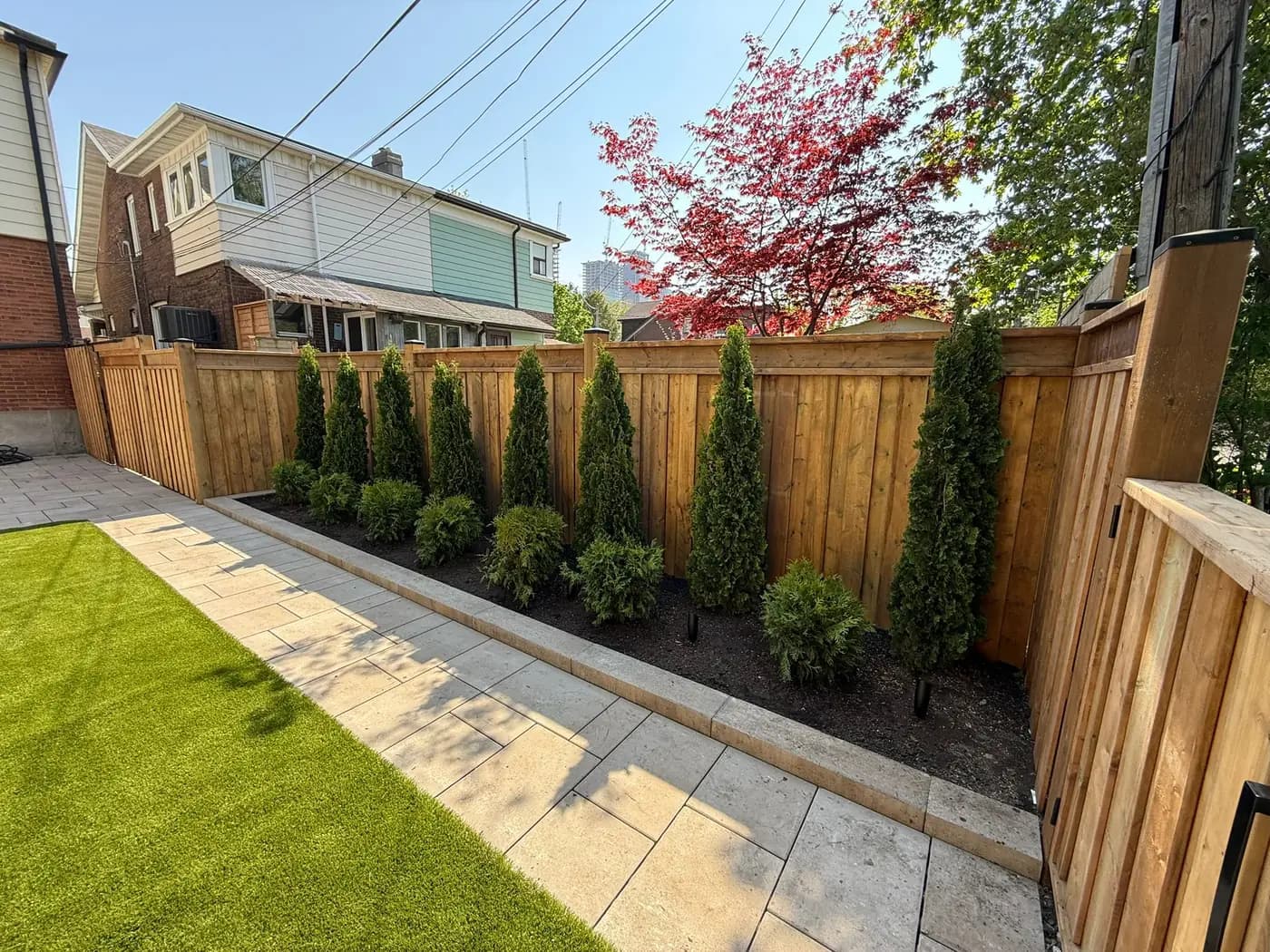
A hundred and eighty linear feet of six-foot pressure-treated fence in Downsview, and gate and boundary work on several other properties, where the fence, the planting in front of it and the surface beside it were treated as one edge rather than three separate trades.
- Service
- Fencing, gates and exterior projects
- Location
- Downsview, Toronto
- On site
- Four days and up
- Crew
- Two of us
- Scale
- About 180 linear feet · $12,500
Repeat customer
01 / What was there
Rip out the old fence and install a clean six-foot fence.
What the customer asked for
A fence is usually bought as a fence. One crew installs it, the ground beside it stays whatever it was, and the result is a good fence standing in an unfinished yard.
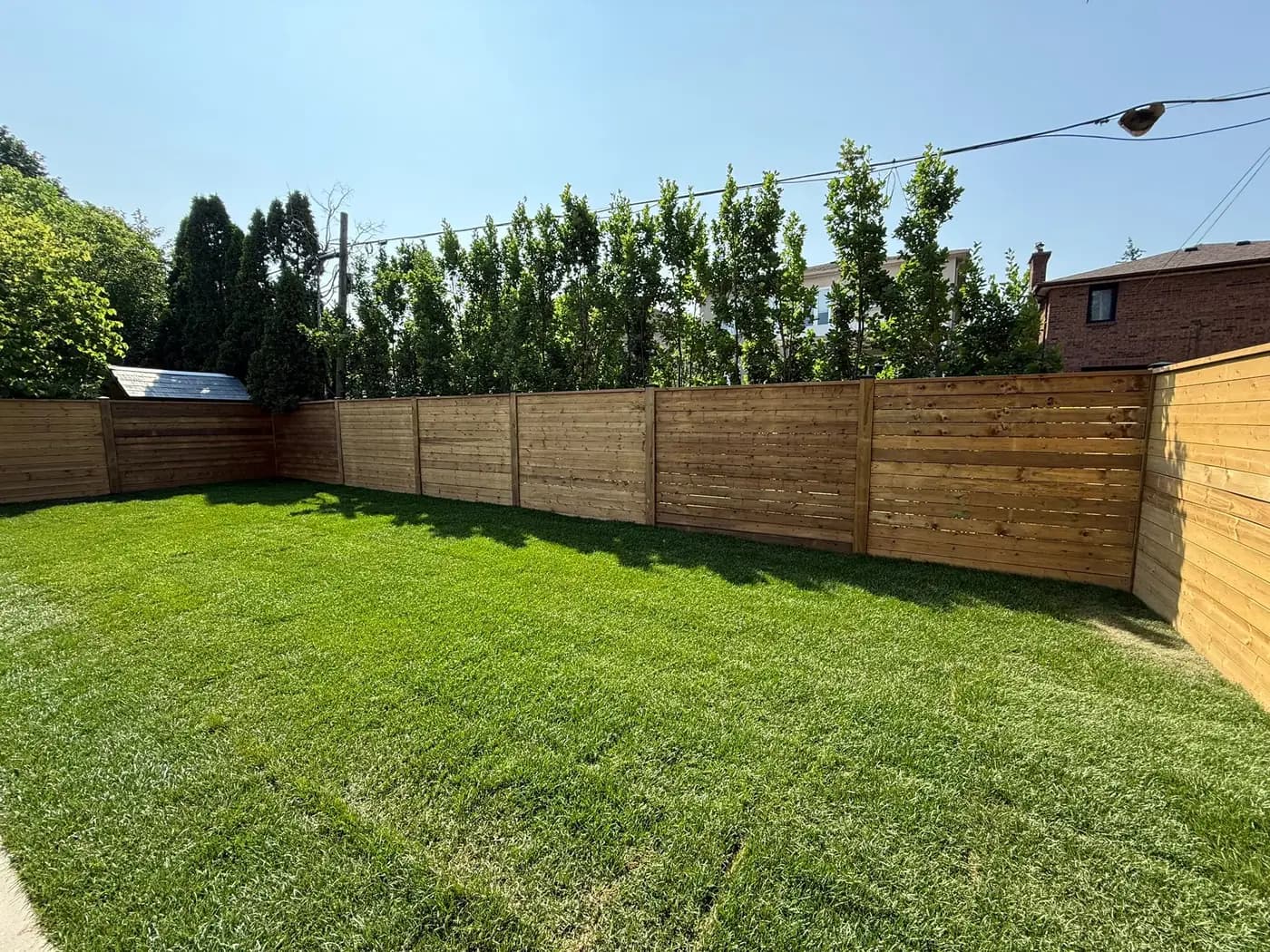
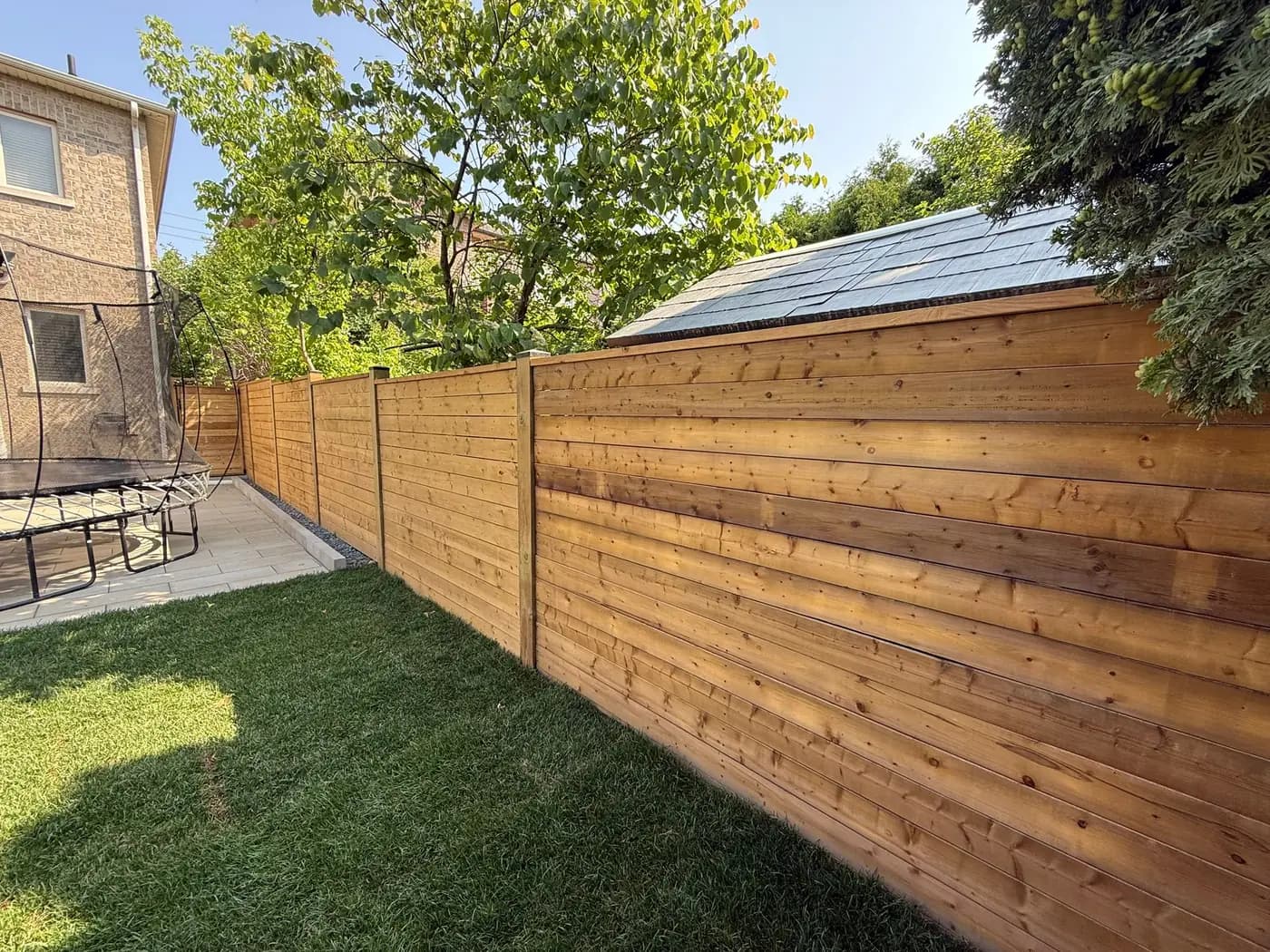
The Downsview job was a straight replacement: rip out the old fence, install a hundred and eighty linear feet of six-foot pressure-treated in its place, four days with two of us. The rest of the work below is from other properties. Some runs are vertical board with a cap rail, some are horizontal. What they share is that the boundary was built as one thing: the fence line, the planting strip in front of it, the walkway beside it and the lawn meeting all three.
02 / How it was done
- 01
Set the line before anything goes in the ground
A fence run tells on itself. Any wander in the post line shows up along the whole length, and it shows up worst on horizontal boards, where every course repeats the error.
- 02
Keep the reveal consistent through the gate
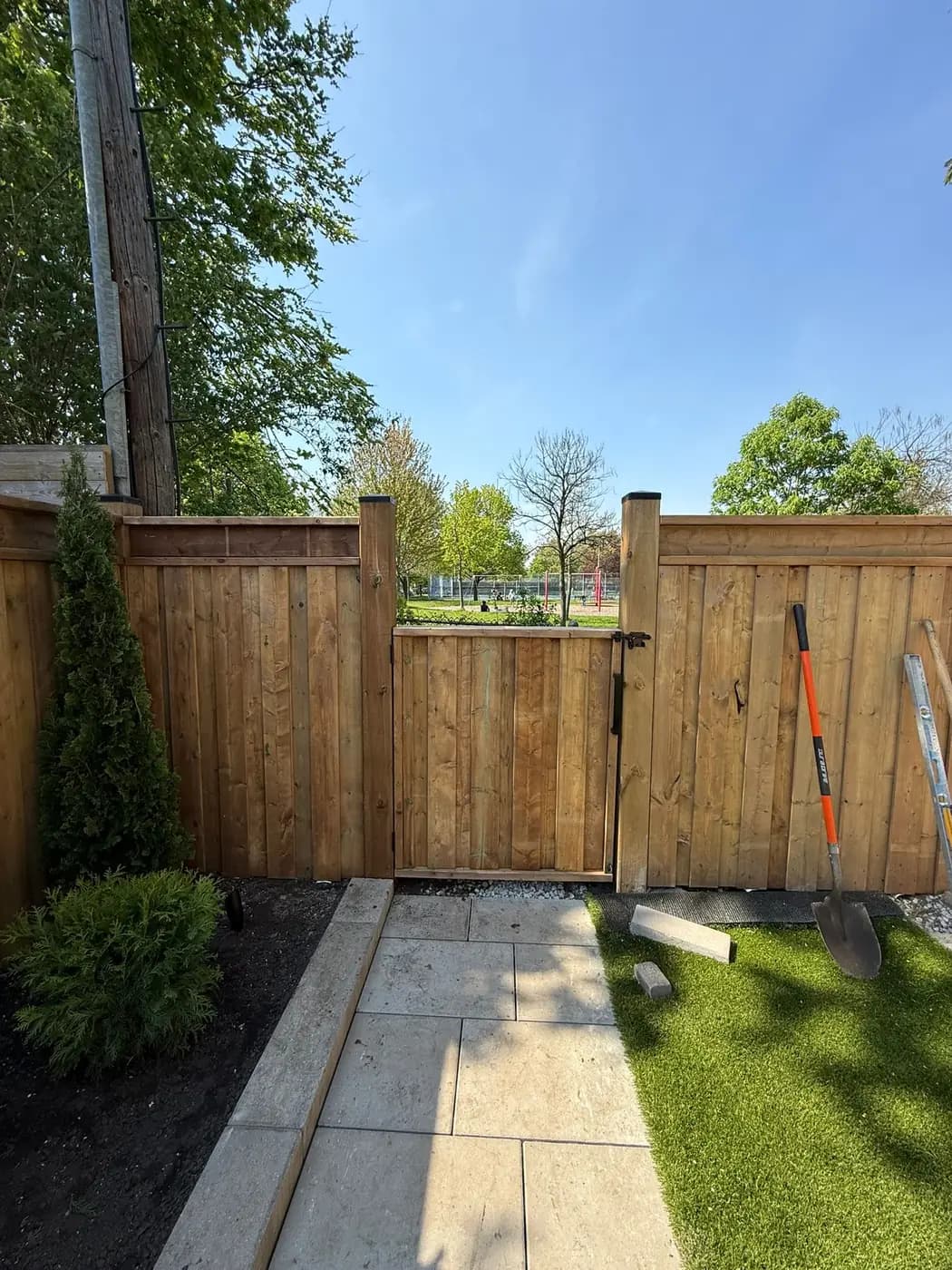
The gap between boards is the detail that carries a wood fence. Holding it constant through the gate is what makes the gate disappear into the run when it is closed, instead of reading as a panel someone cut out.
- 03
Plant while there is still access
Cedars go in before the yard is closed up, not after. Planting at that stage is what turns the fence into a backdrop rather than the main event.
- 04
Land the hard and soft surfaces on the same line
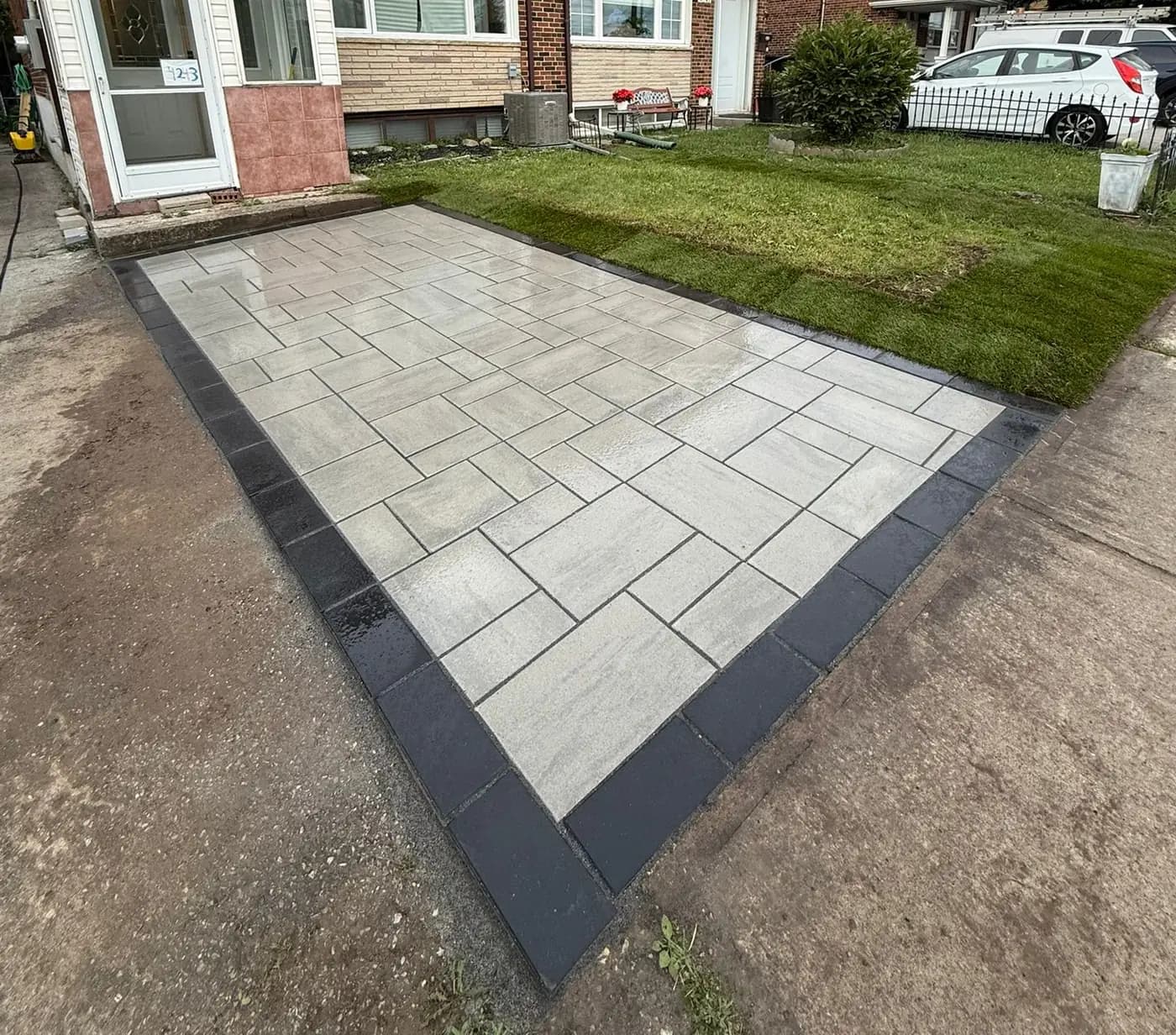
Walkway, mulched planting strip and turf meeting along one edge, so the eye reads a single boundary instead of three jobs that happened to end near each other.
03 / What changed
- A hundred and eighty feet of continuous six-foot fence with the gates reading as part of the run rather than as openings in it.
- Young cedars set into mulched strips with room to grow into the fence instead of against it.
- Walkway, planting and lawn meeting cleanly, so the boundary looks designed rather than assembled.
Same thing happening on your property?(437) 324-6505